

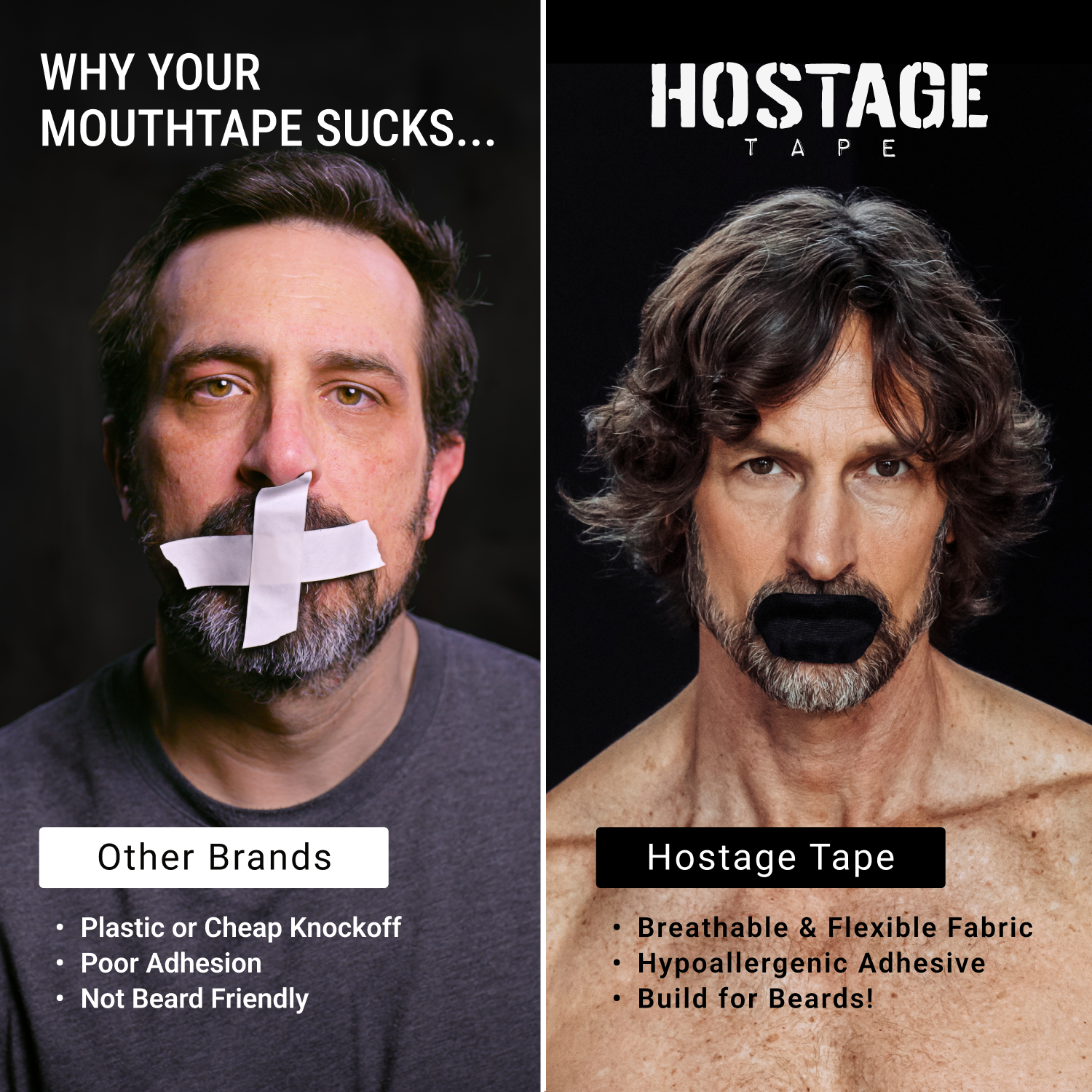
If you’ve seen mouth taping trending on TikTok or heard about its benefits for sleep and snoring, you might be wondering: Do I really need a special kind of tape… or can I just use regular tape?
Let’s break it down.
What Is Mouth Taping?
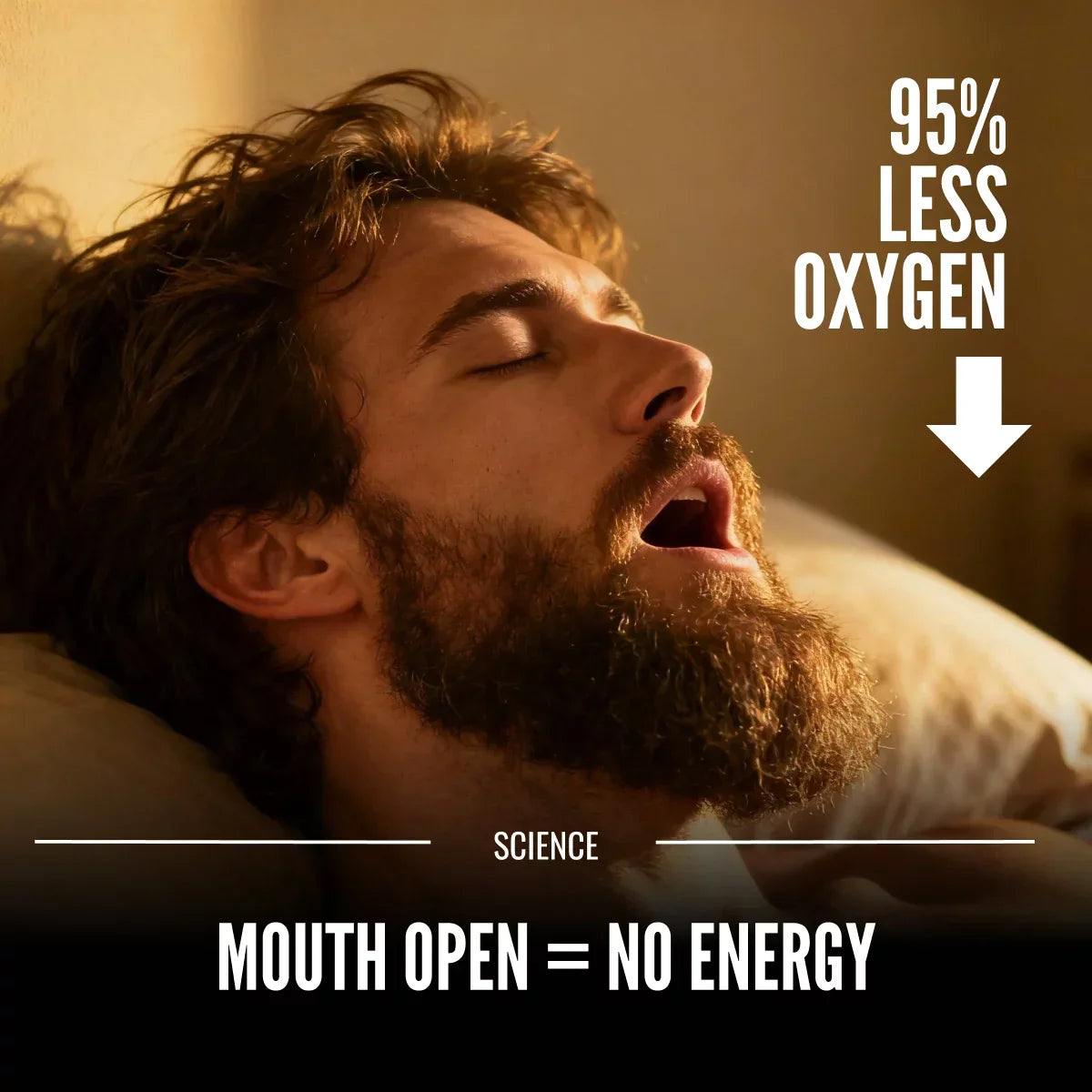
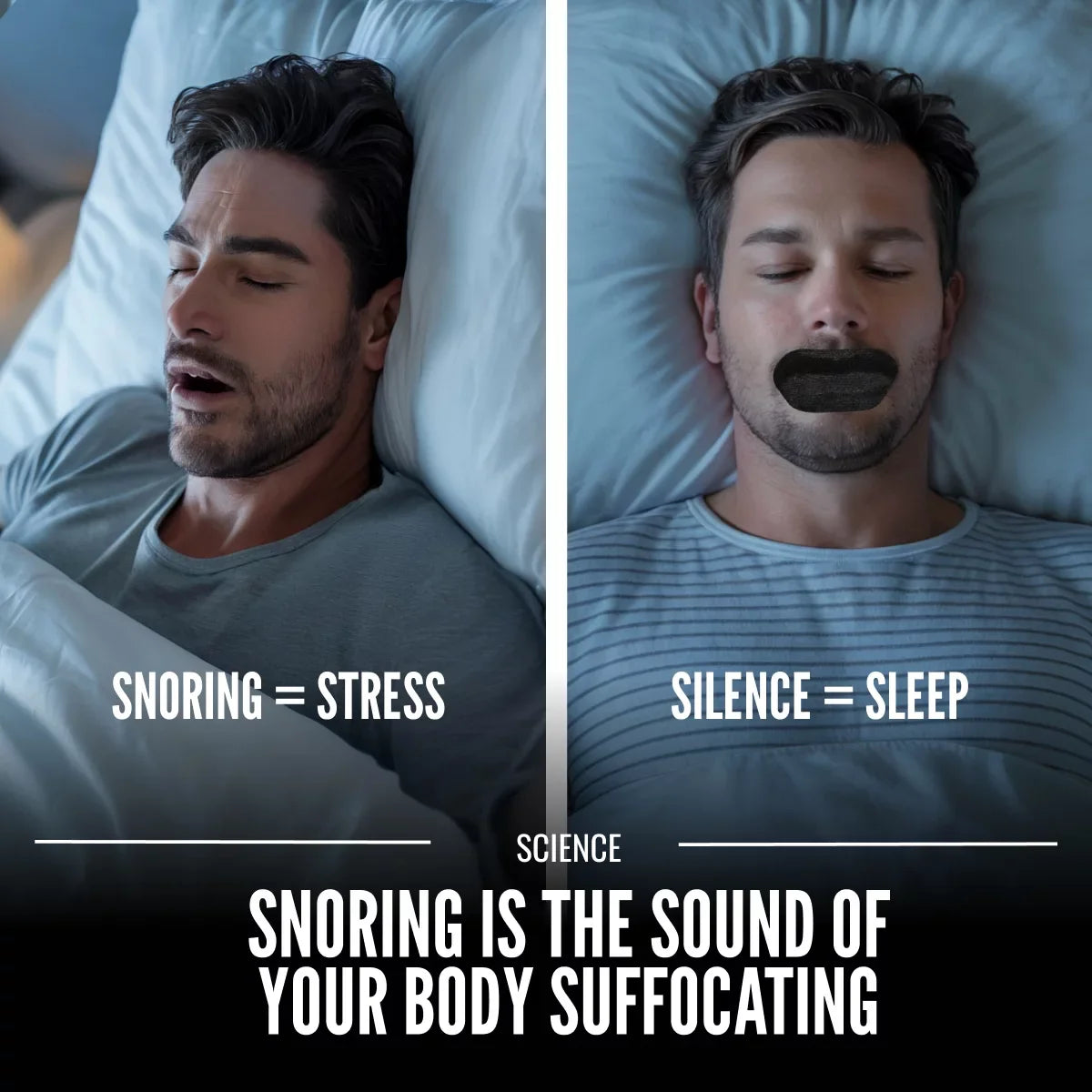
Mouth taping is the act of placing a strip of tape over your lips while you sleep to promote nasal breathing. Nasal breathing helps improve sleep quality, reduce snoring, support oral health, and prevent dry mouth.
But not all tape is created equal, and using the wrong kind can do more harm than good.
Why You Should Not Use Regular Tape
Using household tape, like Scotch tape, duct tape, masking tape, or packing tape, is not safe for mouth taping.
Here’s why:
❌ Not Skin-Safe
Most regular tapes are designed for boxes, plastic, and paper—not delicate skin. They often contain harsh adhesives that can cause:
- Redness and irritation
- Skin rashes or allergic reactions
- Peeling or damage, especially around the sensitive skin on your lips
❌ Doesn’t Stick Properly
Cheap tape tends to lose adhesion overnight due to:
- Facial oils and sweat
- Movement while sleeping
- Talking or shifting during the night
This means you’ll likely wake up with the tape on your pillow, not your mouth.
❌ Risk of Tearing or Choking
If the tape isn’t breathable or rips poorly, it can be a choking hazard or difficult to remove quickly.
What Makes a Good Mouth Tape?
A proper mouth tape is:
✅ Hypoallergenic & Skin-Safe
Designed for the sensitive area around the lips, with medical-grade adhesive that stays on but comes off easily in the morning.
✅ Strong but Comfortable
It should stay in place all night, even if you move, talk, or sweat, but never feel suffocating.
✅ Shaped for the Face
A mouth tape designed for sleep should contour to your lips and allow for safe removal if needed.
What Happens When You Use the Right Tape
Thousands of people report benefits like:
- Falling asleep faster
- Waking up without dry mouth or bad breath
- Reduced snoring
- Better mood, energy, and focus during the day
But none of these benefits happen if the tape falls off or irritates your skin.
The Bottom Line
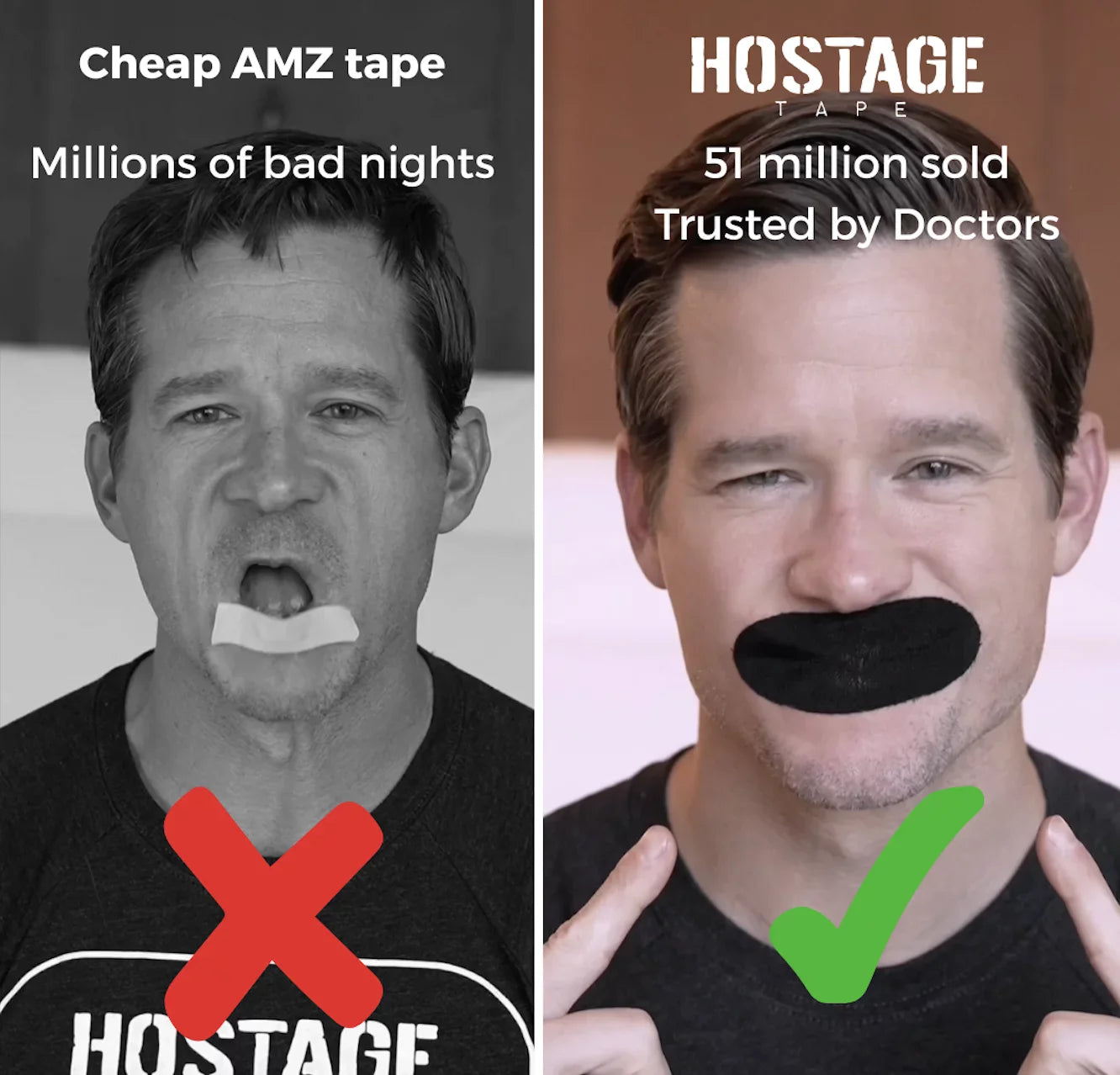
You can try mouth taping with regular tape… but it’s not safe, effective, or recommended. It’s like using duct tape as a Band-Aid—not what it’s made for, and definitely not worth the risk.
Instead, choose a product made for the job, like Hostage Tape: The strongest, skin-safe, and most comfortable mouth tape on the market, trusted by thousands for better sleep and better breathing.
FAQ
Q: Is it dangerous to use duct tape or masking tape for mouth taping?
A: Yes. Regular tapes are not meant for skin contact and can lead to irritation, allergic reactions, or even choking if not removed properly.
Q: What should I look for in a mouth tape?
A: Medical-grade adhesive, skin-safe materials, a strong hold that lasts all night, and easy removal in the morning.
Q: What if I tried regular tape and it didn’t work?
A: That’s common. Many people try regular tape, find it uncomfortable or ineffective, and then switch to a dedicated mouth tape like Hostage Tape and never look back.
Share:
How Does Mouth Tape Help Your Jawline?
Mouth Tape with a Beard: Does It Work?