


Mouth breathing isn’t just a small habit. Over time, it can damage your sleep, your dental health, and even your energy levels. Here are some of the most common questions people ask about mouth breathing and the answers backed by science. And how mouth tape can help.
Q: What percentage of adults who snore are mouth breathers?
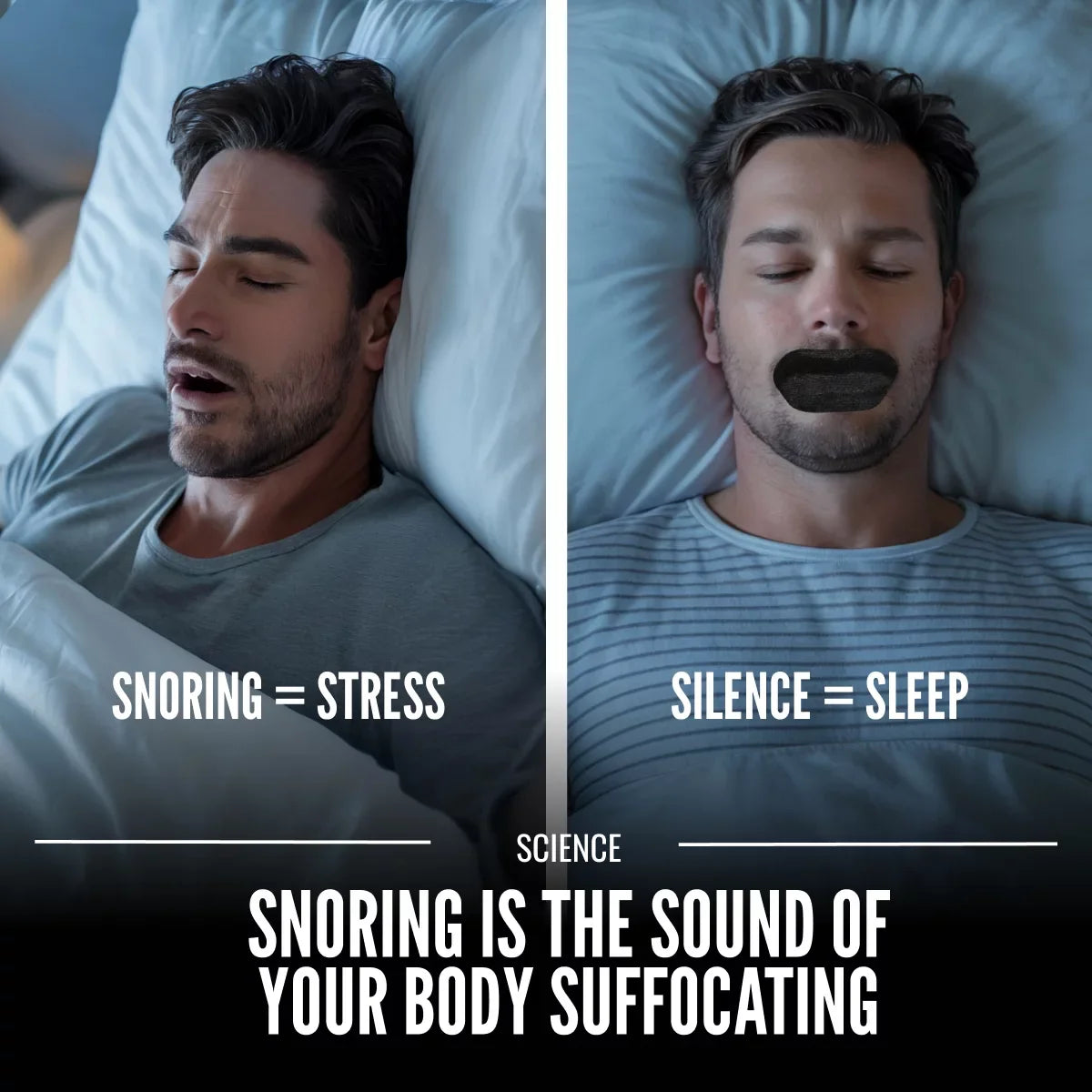
A: Snoring and mouth breathing are closely connected. Roughly 40% of adults snore regularly, and research shows that about 80% of them are also mouth breathers. That’s because the open-mouth posture during sleep makes the airway vibrate more easily, producing snoring sounds.
When you sleep with your mouth open, the tongue falls backward, the airway narrows, and airflow becomes turbulent. This is what makes snoring louder and more frequent. So, while snoring might feel like the main problem, the underlying issue is often mouth breathing.
Snoring & Mouth Breathing Statistics
| Group | Percentage |
|---|---|
| Adults who snore regularly | 40% |
| Snorers who are mouth breathers | 80% |
Q: What’s the difference in oxygen levels between nasal and mouth breathing?
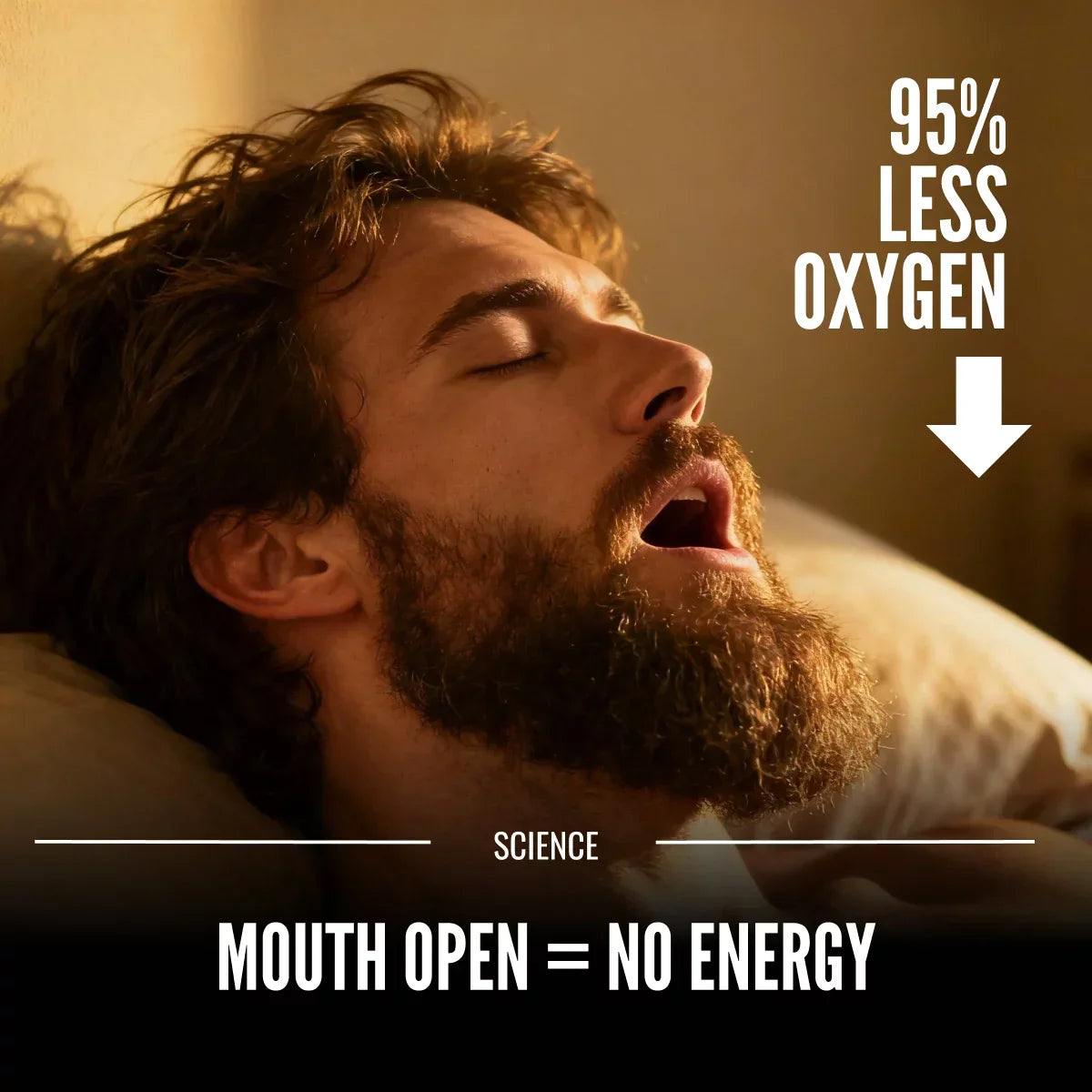
A: Breathing through the nose filters, warms, and humidifies the air and it also allows for better oxygen absorption because of the production of nitric oxide. When you switch to mouth breathing, oxygen efficiency plummets.
On average, nasal breathers maintain 95–98% oxygen saturation during sleep. Mouth breathers, by contrast, can drop to 80–85%, which is a significant decline. That means your body and brain are running on less fuel, which translates into poor recovery, brain fog, and fatigue.
Oxygen Saturation: Nasal vs Mouth Breathing
| Breathing Type | Oxygen Saturation |
|---|---|
| Nasal breathing | 95–98% |
| Mouth breathing | 80–85% |
Q: How does mouth breathing affect children’s teeth?
A: Mouth breathing in children is particularly concerning because it happens during key growth years. When a child breathes through their mouth, it changes tongue posture and jaw development. Over time, this can lead to narrow dental arches, misaligned teeth, and even changes in facial structure.
Research suggests that children who mouth breathe are 60% more likely to need braces or develop crooked teeth compared to those who primarily breathe through their nose. Left unchecked, it can affect speech, oral health, and confidence well into adulthood.
Children’s Dental Health
| Group | Braces / Crooked Teeth Likelihood |
|---|---|
| Nasal breathers | Baseline |
| Mouth breathers | +60% more likely |
Q: Do mouth breathers face higher rates of gum disease and tooth decay?
A: Yes. Gum tissue thrives in a moist, oxygenated environment. When the mouth is dry, bacteria flourish, plaque hardens faster, and gums become inflamed. That’s why 7 in 10 mouth breathers show early signs of gum disease.
Additionally, because of lower saliva production, enamel protection is reduced, leading to a 2x higher rate of tooth decay compared to nasal breathers. These dental issues don’t just cause discomfort — they’re costly and often require long-term treatment.
Gum Disease & Tooth Decay
| Condition | Prevalence / Risk |
|---|---|
| Early gum disease (gingivitis) | ≈70% of mouth breathers |
| Tooth decay | ~2× higher vs nasal breathers |
Q: Why does mouth breathing cause daytime tiredness?
A: Many people think 8 hours in bed equals 8 hours of rest — but that’s not true if you’re mouth breathing. Open-mouth breathing disrupts deep and REM sleep cycles. Instead of restorative sleep, you wake up multiple times without realizing it, which fragments recovery.
That’s why 8 hours of mouth-breathing sleep can feel like just 4–5 hours. The result is waking up groggy, reaching for caffeine, and dragging through the day. Nasal breathing, by contrast, supports longer deep-sleep cycles, giving the body the chance to repair and recharge.
Sleep Quality: Nasal vs Mouth Breathing
| Breathing Type | Restorative Equivalent |
|---|---|
| Nasal breathing | 7–9 hours restorative |
| Mouth breathing | Feels like 4–5 hours |
Final Thoughts
Mouth breathing affects much more than just your comfort at night. It raises your risk of cavities, gum disease, and braces, while lowering oxygen and wrecking sleep quality. The good news? With simple interventions like training your body to breathe through your nose and using solutions like mouth tape at night you can start reversing the damage and protecting your health.
Escape Bad Sleep Tonight with Hostage Tape.

Share:
Can You Mouth Tape When Sick?
Hostage Tape: Reclaim Your Sleep, Stop the Snore, Save Your Sanity