


The Science Behind Mouth Tape and Nasal Breathing During Sleep
What Nasal-Breathing Research Can Tell Us
Research on nasal physiology, deliberate breathing exercises, and mouth taping addresses different questions. To understand a finding, check who participated, what intervention was used, and what the researchers measured. A result from one setting does not establish the same result for every sleeper or for Hostage Tape.
1) Nasal Physiology and Overnight Oxygen Measurements
A 1996 study compared nasal and oral breathing in healthy subjects and examined adding nasal air to ventilators in intubated patients. It measured oxygen tension and pulmonary vascular responses, not overnight mouth-tape use or sleep efficiency. It does not establish an average overnight oxygen-saturation range for people wearing mouth tape. Read the physiological study.
2) Slow Breathing Research Studies a Different Intervention
Jerath and colleagues proposed a mechanism for voluntary slow, deep breathing. Their paper is a physiological hypothesis about a deliberate breathing practice. It does not establish that taping the mouth during sleep lowers cortisol, changes sleep stages, or produces particular heart-rate or heart-rate-variability values. Read the breathing hypothesis.
3) Match the Finding to the Population and Product
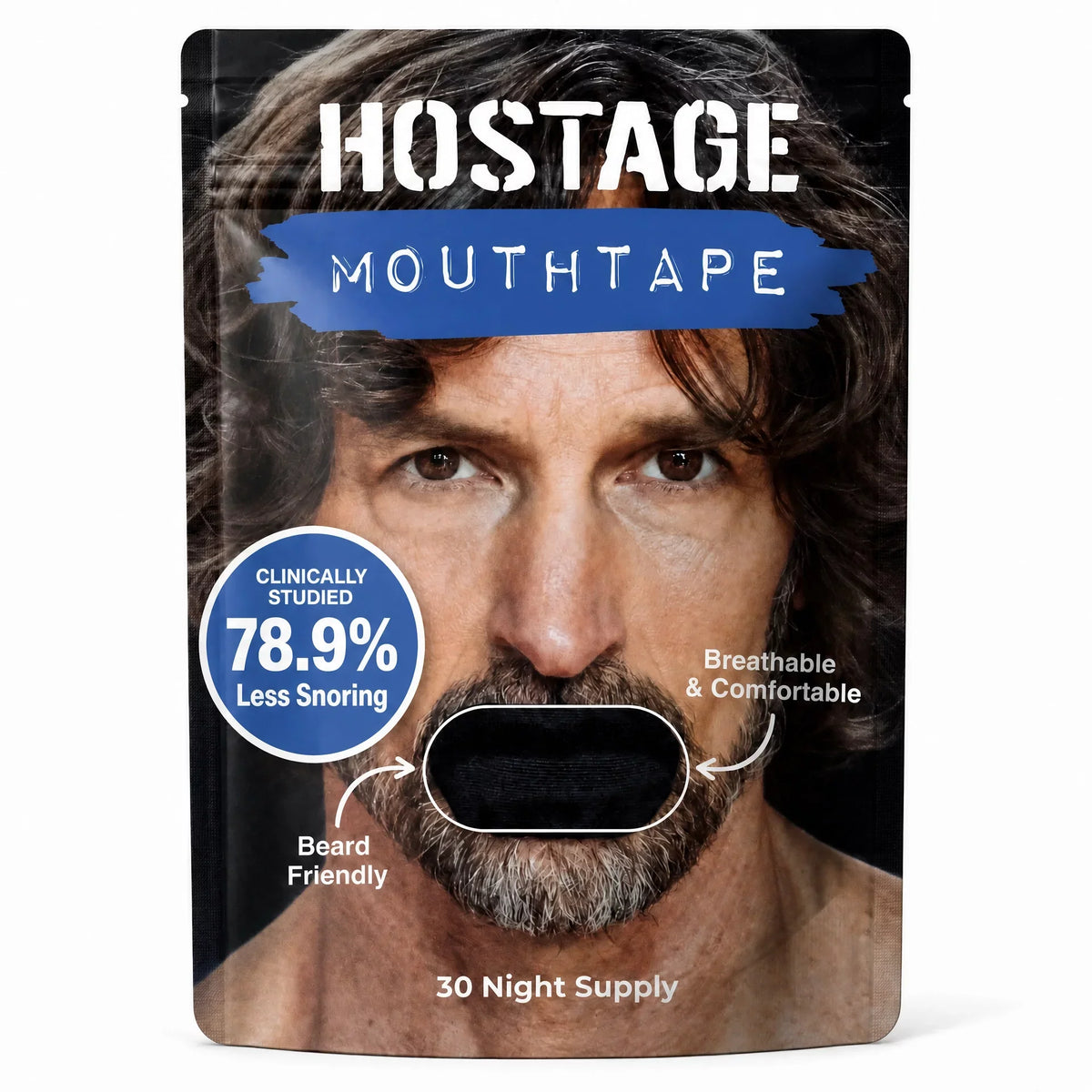
Before applying a study to a purchase decision, look for the product tested, the participants' health conditions, and the comparison used. Research on nasal air, deliberate breathing, or a different adhesive cannot by itself establish a benefit from Hostage Tape. Our buyer's guide provides a checklist for comparing product information.
4) Nitric Oxide Production Is a Physiological Finding
Research on human sinus tissue supports nitric oxide production in the paranasal sinuses. That finding does not establish a nitric-oxide concentration, improved circulation, or an antimicrobial outcome from wearing Hostage Tape. Read the sinus-tissue study.
5) What a Preliminary Mouth-Taping Study Measured
A 2022 preliminary study enrolled 20 selected people with mild obstructive sleep apnea who could tolerate mouth sealing. It compared baseline home sleep testing with testing one week later using 3M silicone hypoallergenic tape. Snoring and apnea-hypopnea measurements improved, while mean oxygen saturation did not change significantly. This small before-and-after study used a different tape and does not establish the same result for Hostage Tape or for every sleeper. Read the mouth-taping study.
Considering Mouth Tape?
Review the product instructions and discuss individual suitability with a qualified healthcare professional. A study's findings do not replace an assessment of your own breathing or sleep concerns.
Read the mouth-tape use guide →
Related Reading
- The Science Behind Mouth Taping
- Are Mouth Breathing Effects Permanent?
- How Mouth Taping Can Unlock Your Jawline
References
- Lundberg JO et al. Inhalation of nasally derived nitric oxide modulates pulmonary function in humans. Acta Physiologica Scandinavica. 1996;158(4):343–347. doi:10.1046/j.1365-201X.1996.557321000.x.
- Jerath R et al. Physiology of long pranayamic breathing: neural respiratory elements may provide a mechanism that explains how slow deep breathing shifts the autonomic nervous system. Medical Hypotheses. 2006;67(3):566–571. doi:10.1016/j.mehy.2006.02.042.
- Lundberg JO et al. Calcium-independent and steroid-resistant nitric oxide synthase activity in human paranasal sinus mucosa. European Respiratory Journal. 1996;9(7):1344–1347. doi:10.1183/09031936.96.09071344.
- The Impact of Mouth-Taping in Mouth-Breathers with Mild Obstructive Sleep Apnea: A Preliminary Study. Healthcare. 2022;10(9):1755. doi:10.3390/healthcare10091755.
Note on Data and Sources
The cited studies examined different populations and interventions. They do not provide universal nighttime averages for mouth-tape users. Findings about oxygen tension, reported sleep experience, sleep efficiency, and other measurements should not be treated as interchangeable.
Medical Disclaimer
The information in this article is for educational purposes only and does not constitute medical or dental advice. It should not be used as a substitute for individualized evaluation or treatment by a qualified healthcare provider. Mouth taping may not be appropriate for everyone; individuals with respiratory, nasal, or sleep-related conditions should consult their physician or dentist before use.
Share:
How to Use Mouth Tape Safely for Better Sleep - Dr. David Alfi, DDS MD
How to Use Mouth Tape Safely for Better Sleep - Dr. David Alfi, DDS MD