

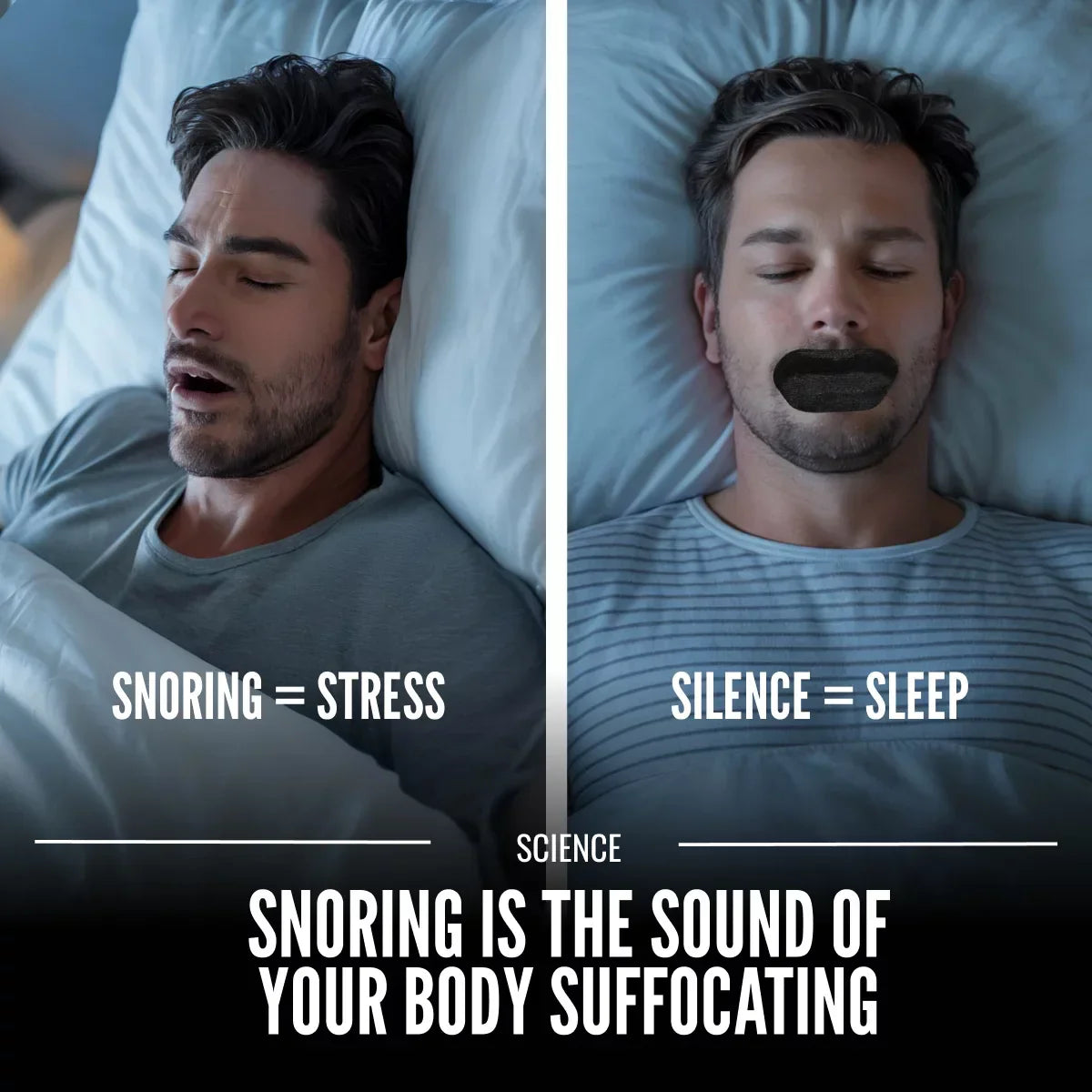
Mouth Taping for Snoring: Does It Help?
Meta Description: Can mouth taping help with snoring? This guide explores the connection between mouth breathing and snoring, what the research says about mouth taping for snoring, and when it might be effective.
Author: Alex Neist, Sleep & Wellness Researcher
Table of Contents
- The Bottom Line: Can Mouth Taping Help with Snoring?
- The Link Between Mouth Breathing and Snoring
- What the Research Says About Mouth Taping for Snoring
- When Mouth Taping Might Help with Snoring
- When Mouth Taping Will NOT Help with Snoring
- Conclusion: A Potential Tool for Mouth-Based Snoring
The Bottom Line: Can Mouth Taping Help with Snoring?
Yes, for some people, mouth taping can help reduce or eliminate snoring that is caused by mouth breathing. By encouraging nasal breathing, mouth tape can prevent the vibrations in the mouth and throat that often lead to the sound of snoring. However, it is not a cure-all for every type of snoring, especially snoring related to sleep apnea or nasal obstruction.
This article explains how mouth taping can help with snoring and when it is most likely to be effective.
The Link Between Mouth Breathing and Snoring
Snoring is the sound produced by the vibration of soft tissues in the throat and mouth during sleep. When you breathe through your mouth, the airflow can cause the soft palate and uvula to vibrate, resulting in snoring. Mouth breathing can also cause the tongue to fall back into the throat, partially obstructing the airway and contributing to the noise.
By keeping the mouth closed, mouth tape encourages nasal breathing. Nasal breathing is generally quieter and can help maintain a more stable airway, reducing the vibrations that cause snoring.
What the Research Says About Mouth Taping for Snoring
Several studies have investigated the impact of mouth taping on snoring, with promising results:
- A 2015 study in Otolaryngology-Head and Neck Surgery found that a porous oral patch (a type of mouth tape) significantly reduced snoring in patients with mild sleep apnea who were mouth breathers [1].
- A 2022 study in Sleep and Breathing also showed that mouth taping improved snoring in individuals with mild obstructive sleep apnea [2].
While these studies are small, they suggest that mouth taping can be an effective way to reduce snoring in the right candidates.
When Mouth Taping Might Help with Snoring
Mouth taping is most likely to be effective for snoring if:
- You are a mouth breather: If you often wake up with a dry mouth or your partner tells you that you sleep with your mouth open, your snoring is likely related to mouth breathing.
- Your snoring is mild to moderate: For simple snoring that is not associated with a medical condition, mouth taping can be a simple and effective solution.
- You can breathe comfortably through your nose: Mouth taping is only an option if you have clear nasal passages.
When Mouth Taping Will NOT Help with Snoring
Mouth taping is unlikely to be effective and could be dangerous if your snoring is caused by:
- Nasal Obstruction: If you can't breathe through your nose, mouth taping will not help and should not be used.
- Moderate to Severe Sleep Apnea: While it may help with mild sleep apnea, mouth taping is not a substitute for proven treatments like CPAP for more severe cases. Always consult with a doctor if you suspect you have sleep apnea.
- Anatomical Issues: Snoring caused by anatomical features like large tonsils or a deviated septum may not be resolved by mouth taping alone.
For more information on safety, read our article: [Is Mouth Taping Safe? What Medical Experts Say].
Conclusion: A Potential Tool for Mouth-Based Snoring
Mouth taping can be a valuable tool for reducing or eliminating snoring that is caused by mouth breathing. By encouraging nasal breathing, it helps to stabilize the airway and reduce the vibrations that cause snoring. However, it is not a solution for all types of snoring and should be used with caution.
If you are a mouth breather who snores, and you have no issues with nasal breathing, mouth taping may be worth trying after consulting with a healthcare professional.
References
[1] Huang, T. W., & Young, T. H. (2015). Novel porous oral patches for patients with mild obstructive sleep apnea and mouth breathing: a pilot study. Otolaryngology–Head and Neck Surgery, 152(2), 369-373. https://journals.sagepub.com/doi/10.1177/0194599814559383
[2] Lee, Y. C., et al. (2022). The impact of mouth-taping in mouth-breathers with mild obstructive sleep apnea: a preliminary study. Sleep and Breathing, 26(4), 1755-1762. https://link.springer.com/article/10.1007/s11325-022-02589-z
IMPORTANT DISCLAIMER: This article is for informational purposes only and does not constitute medical advice. Always consult with a qualified healthcare professional for any health concerns or before making any changes to your health routine.
Share:
Does Mouth Taping Work? What the Research Shows
My Nighttime Routine Changed Everything: A Simple Sleep Upgrade