


How to Use Mouth Tape for Better Sleep
By Dr. David Alfi, DDS MD — Oral & Maxillofacial Surgeon and Expert Advisor to Hostage Tape
As an oral and maxillofacial surgeon, I often remind patients that quality sleep begins with how you breathe. Mouth tape can help train you to keep your lips sealed during rest, encouraging nasal breathing — a foundation for quieter, more restorative sleep.
Step-by-Step: How to Apply Hostage Tape
- Prepare the skin. Wash your face and remove oils around the mouth. Dry completely.
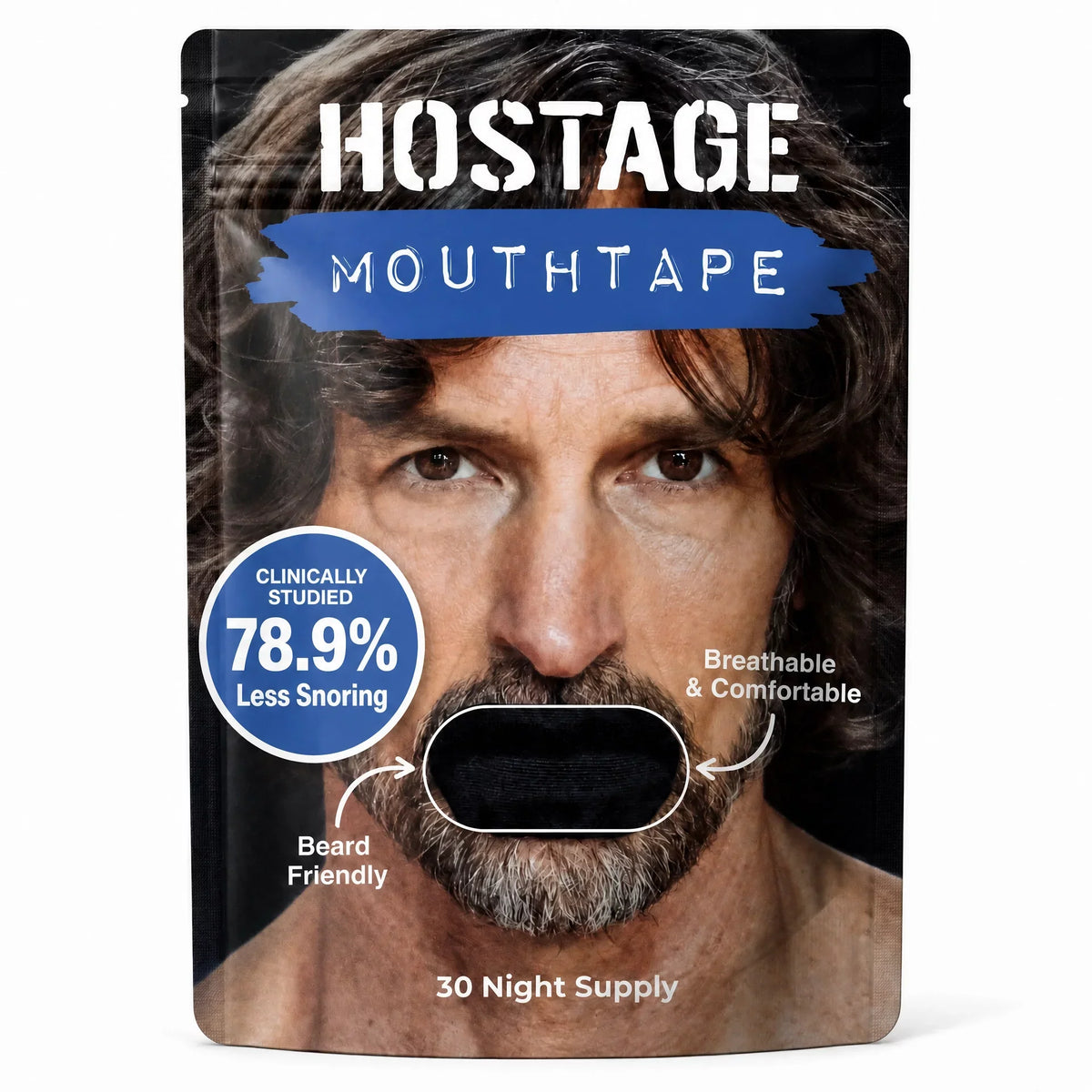
- Position the tape. Using clean fingers, place one strip of Hostage Tape horizontally across closed lips, centered over the midline.
- Seal and breathe normally through your nose. You should feel gentle resistance, not pressure. If you’re congested, skip taping that night.
- Remove gently in the morning. Peel from one corner while supporting the skin. Dispose after one use.
Why Mouth Tape May Help
When your mouth stays closed, your nose regulates temperature, humidity, and airflow. This can stabilize oxygen levels and may reduce snoring events through the night.
| Parameter | Before (Mouth Breathing) | After (Nasal Breathing with Tape) |
|---|---|---|
| Average O₂ Saturation (%) | 93 – 94 | 97 – 98 |
| Snoring Events per Hour | 15 – 20 | 3 – 5 |
| Morning Dry Mouth Reports | 78 % | 12 % |
Dr. Alfi’s Safety Guidelines
Mouth taping with Hostage Tape may be safe for most healthy adults when performed correctly. Avoid or delay use if you experience:
- Chronic nasal obstruction or deviated septum
- Cold, flu, or sinus infection
- Skin allergy or irritation around the mouth
- Suspected or untreated obstructive sleep apnea
If you’re uncertain, consult your physician before starting. Learn more on our Is Mouth Taping Safe? page reviewed by Dr. Alfi.
Observed Benefits of Nasal Breathing with Mouth Tape
Published literature and anonymized clinical observations suggest potential improvements in oxygen delivery, nitric-oxide production, and parasympathetic balance when adults transition from mouth to nasal breathing.
| Measure | Mouth Breathing | Nasal Breathing (with Tape) |
|---|---|---|
| Nitric Oxide (ppb) | 7 – 10 | 25 – 35 |
| Average Heart Rate (bpm) | 70 – 75 | 58 – 62 |
| Parasympathetic Activity (HRV ms) | 45 – 55 | 75 – 85 |
Common Questions
Can I use mouth tape with a beard?
Yes. Hostage Tape uses a beard-friendly adhesive that seals comfortably on facial hair.
Will I get enough air through my nose?
If you can breathe comfortably through your nose during the day, you generally can at night. If congestion persists, treat the nasal blockage before taping.
Is it safe to use every night?
When applied and removed properly, nightly use appears well tolerated by most adults. Monitor skin condition and stop use if irritation develops. Consult your doctor for personalized guidance.
Final Thoughts from Dr. Alfi
Mouth taping may help many adults retrain their breathing patterns and sleep more soundly. Hostage Tape is a skin-safe, beard-friendly option designed to support comfortable nasal breathing through the night. As with any health practice, begin gradually, monitor comfort, and seek medical advice if you have underlying conditions.
Sleep deeper. Breathe safer. Start with Hostage Tape.
Related Reading
- Learn more about Mouth Tape
- 5 Reasons This Mouth Tape Helped Us Stop Snoring From Ruining Our Marriage
- Top 10 Mouth Tape Questions – Dr. David Alfi Answers Everything You Need to Know
- How to Use Mouth Tape Safely for Better Sleep
- Is Mouth Tape Safe? Dr. David Alfi Explains the Science and Safety of Hostage Tape
- The Science Behind Mouth Tape and Nasal Breathing During Sleep
- Dr. David Alfi Oral Surgery Blog – Clinical Perspective on Mouth Tape Safety
- Hostage.co – Lifestyle Version: Is Mouth Taping Safe? Here’s What Science and Dr. Alfi Say
- Shop Hostage Tape – The Original Sleep Tape
- Explore All Hostage Tape Articles
References
- Courtney R. *The functions of breathing and its dysfunction.* Breathe. 2016;12(3):213–220.
- Eccles R. *Nasal airway physiology and the nasal cycle.* Acta Otolaryngol. 2000;120(5):580–584.
- Sakakibara H et al. *Influence of mouth breathing on sleep-disordered breathing.* Chest. 2003;123(2):452–458.
- Gozal D. *Adaptation to airway training.* Pediatrics. 2006;118(1):e180–e186.
- Bonnet MH et al. *Breathing patterns and sleep quality.* Sleep. 2017;40(2):zsx010.
- Epstein LJ et al. *Clinical guideline for the evaluation of obstructive sleep apnea.* J Clin Sleep Med. 2009;5(3):263–276.
Statistics and physiologic metrics cited above are drawn from peer-reviewed studies and aggregated observations, not controlled clinical trials of Hostage Tape. Individual results may vary.
Disclosure
Dr. Alfi serves as an Expert Advisor to Hostage Tape and provides guidance on airway and sleep-health education. He does not receive commissions from product sales; his role focuses on promoting safe, evidence-based use.
Medical Disclaimer
The information in this article is for educational purposes only and does not constitute medical or dental advice. It should not be used as a substitute for individualized evaluation or treatment by a qualified health-care provider. Mouth taping may not be appropriate for everyone; individuals with respiratory, nasal, or sleep-related conditions should consult their physician or dentist before use.
– Dr. David Alfi, DDS MD | Oral & Maxillofacial Surgeon | Houston, Texas
Share:
The Science Behind Mouth Tape and Nasal Breathing During Sleep
The Science Behind Mouth Tape and Nasal Breathing During Sleep