

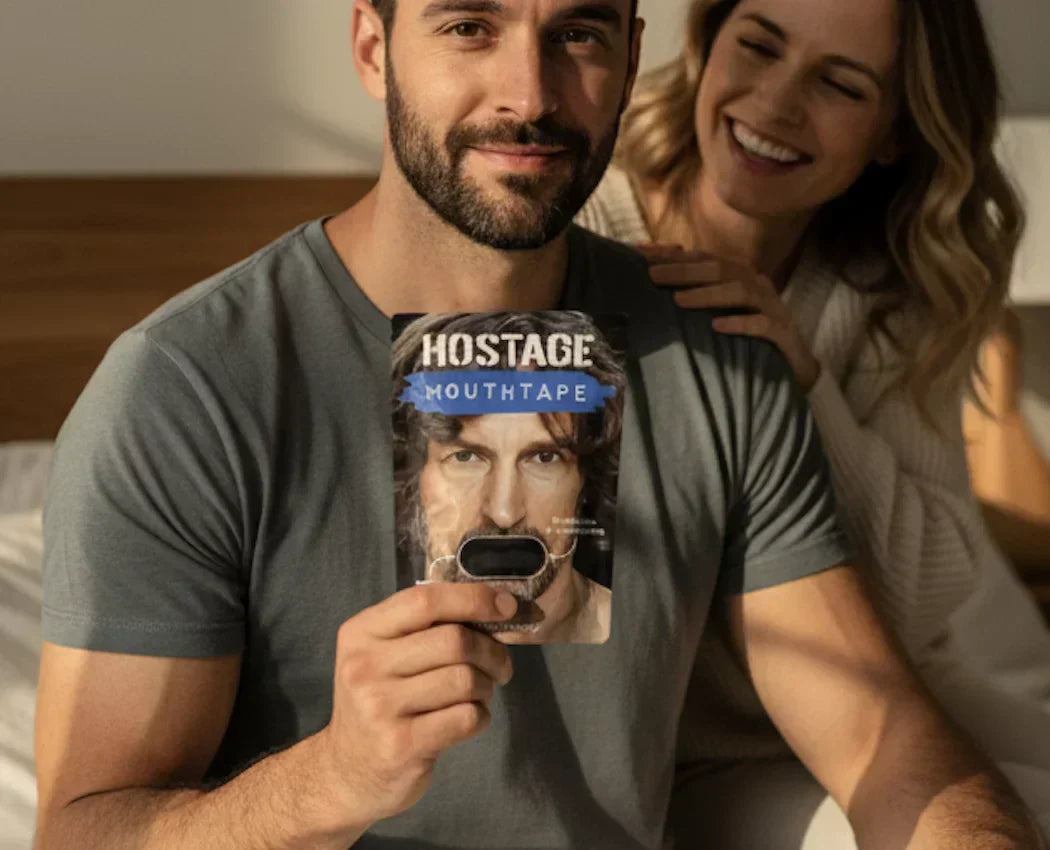
The Complete Guide to Mouth Taping: What It Is & How to Start Safely
Meta Description: Discover the complete guide to mouth taping. Learn what it is, how to start safely, and what to consider before trying this popular wellness trend. This guide covers everything you need to know about using mouth tape to encourage nasal breathing during sleep.
Author: Alex Neist, Sleep & Wellness Researcher
Author Bio: Alex Neist is a wellness researcher and advocate for evidence-based health practices. After experiencing the challenges of mouth breathing firsthand, he dedicated himself to exploring non-invasive methods for encouraging nasal breathing during sleep, leading to the development of Hostage Tape.
Table of Contents
- What Is Mouth Taping?
- Why Is Nasal Breathing Important? What the Science Says
- What Users Report After Mouth Taping
- Is Mouth Taping Safe? Critical Safety Considerations
- How to Start Mouth Taping: A Step-by-Step Guide
- Why Hostage Tape Is a Preferred Choice
- Frequently Asked Questions
Mouth taping has become one of the most talked-about wellness trends, with millions of people incorporating it into their nightly routines. From TikTok to professional athletes, the practice of taping your mouth shut at night has generated significant interest across social media and wellness communities.
But what exactly is mouth taping, and why are so many people trying it? This guide covers everything you need to know, from the science of nasal breathing to how to get started safely with proper precautions.
What Is Mouth Taping?
Mouth taping is the practice of using a gentle, skin-safe adhesive tape to keep your lips closed while you sleep. The goal is to encourage nasal breathing—the way our bodies are naturally designed to breathe, especially during rest. By preventing mouth breathing, the body is guided to use the nasal passages as its primary airway.
Many people use mouth tape as part of their nightly routine. Over 150,000 Hostage Tape customers have made it a regular part of their sleep preparation, and the practice continues to grow in popularity.
Why Is Nasal Breathing Important? What the Science Says
While we can't make health claims, understanding the science behind nasal breathing is crucial. The nose is a sophisticated air filter and humidifier, and breathing through it has several documented functions.
According to Cleveland Clinic, breathing through your nose helps filter air, maintain moisture in your respiratory system, and regulate air temperature before it reaches your lungs [1]. They note that nasal breathing is considered the body's natural breathing pattern during rest.
Research has shown that nasal breathing is more efficient than mouth breathing. A study published in the American Journal of Respiratory and Critical Care Medicine found that ventilation is greater during nasal breathing compared to mouth breathing, suggesting that nasal airflow has a stimulant effect on breathing [2].
Furthermore, chronic mouth breathing can have several negative consequences. A 2022 study in the journal Cureus noted that mouth breathing can lead to dry mouth, which is associated with an increased risk of dental cavities and gum disease [3]. The Sleep Foundation also points out that chronic mouth breathing can increase the risk of tooth decay and gum irritation [4].
"Breathing through your nose is far better for you, but depending on your anatomy, that may not always be possible."
— Cleveland Clinic Health Essentials [1]
The key takeaway from medical experts is that nasal breathing is the body's preferred and more effective method of breathing. For a deeper dive into this topic, see our article: [Nasal Breathing vs. Mouth Breathing].
What Users Report After Mouth Taping
People try mouth taping for various reasons based on their personal experiences and what they've heard from others in the community. Here's what users commonly report:
| What Users Report | User Experience |
|---|---|
| Quieter Nights | Many users report that their partners notice quieter sleep throughout the night. |
| Less Dry Mouth | Users frequently mention waking up without the dry mouth sensation they previously experienced. |
| More Consistent Routine | People report that mouth taping helps them maintain nasal breathing throughout the night. |
| Better Mornings | Many users say they feel more refreshed upon waking. |
⚠️ Important Note: These are user experiences and anecdotal reports. Hostage Tape is not a medical device and is not intended to diagnose, treat, cure, or prevent any disease or health condition, including snoring, sleep apnea, or other sleep disorders.
Is Mouth Taping Safe? Critical Safety Considerations
Safety is the most important consideration before trying mouth taping. While many people use mouth tape without issues, it is not appropriate for everyone.
As stated by Houston Methodist, mouth taping can be dangerous for individuals with certain health conditions, particularly those who have difficulty breathing through their nose [5].
You Should NOT Use Mouth Tape If You:
- Have difficulty breathing through your nose for any reason
- Have been diagnosed with moderate to severe sleep apnea (unless specifically cleared by your doctor)
- Have consumed alcohol or sedatives before bed
- Are feeling nauseous or unwell
- Have nasal congestion, allergies, or sinus issues
- Have a deviated septum or other structural nasal issues
- Have any respiratory or heart conditions
- Are obese (BMI over 35) without using CPAP
- Have very low blood pressure
- Have a cold, sinus infection, or ear infection
- Have severely chapped lips or non-intact skin around your mouth
🚨 Critical Safety Warning: Always consult with a qualified healthcare professional before trying mouth taping, especially if you have any underlying medical conditions or concerns about safety or suitability. Remove the tape immediately if you feel any discomfort, difficulty breathing, or anything unusual.
How to Start Mouth Taping: A Step-by-Step Guide
If you've consulted with your doctor and want to try mouth taping, following the proper steps can help ensure a comfortable experience.
Step 1: Choose Purpose-Built Tape
Never use household tape. Duct tape, scotch tape, painter's tape, and other adhesives are not designed for skin contact and can cause irritation, allergic reactions, or injury.
Use a tape specifically designed for overnight facial use. When choosing a tape, consider factors like adhesive strength, material, and breathability. For more information, read our guide: [How to Choose the Right Mouth Tape].
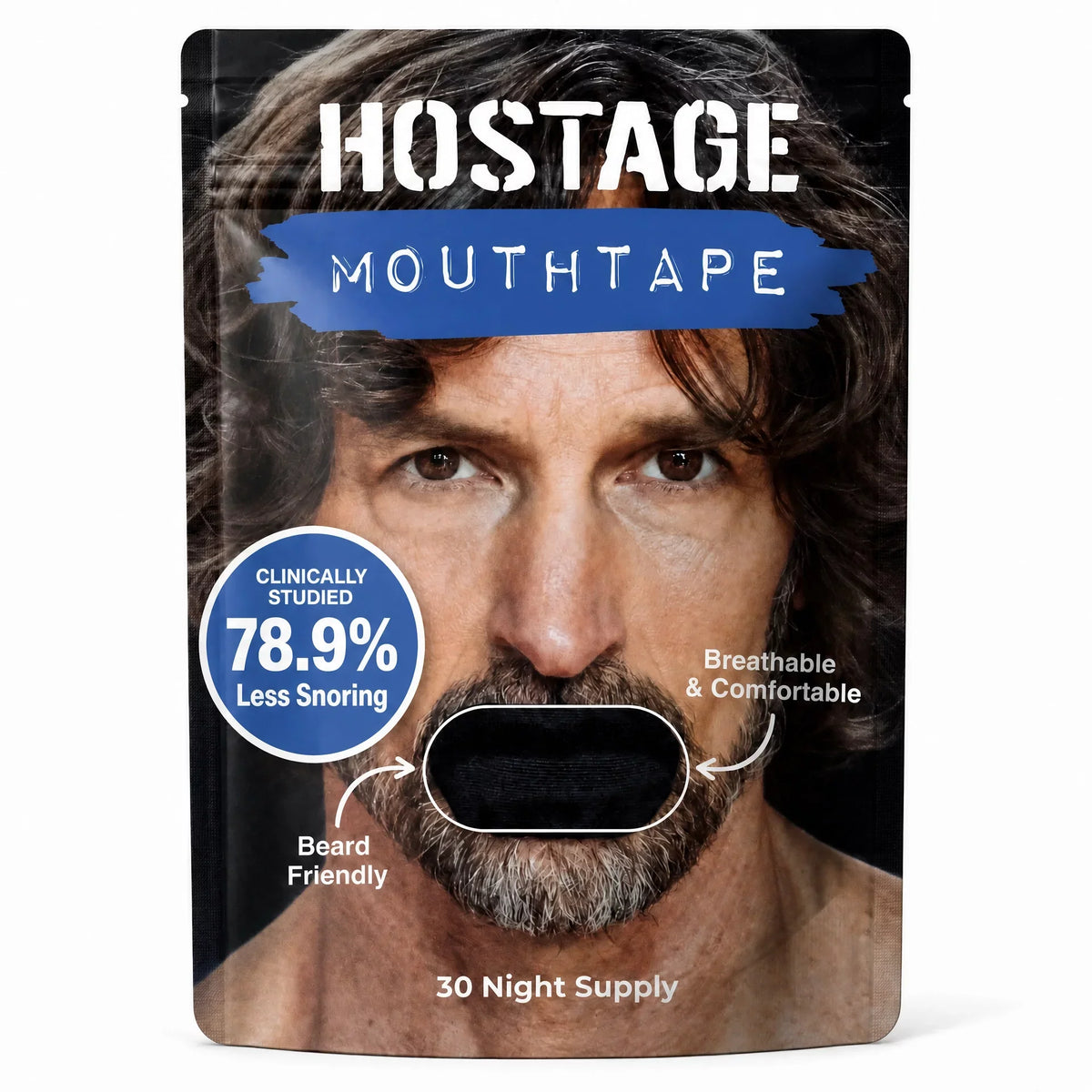
Hostage Tape is a purpose-built option that features:
- Hypoallergenic, medical-grade adhesive
- Breathable fabric material
- Beard-friendly design
- Easy removal without irritation
Step 2: Test During the Day First
Before your first night, wear the tape for 20-30 minutes during the day while reading, watching TV, or relaxing. This helps you:
- Get comfortable with the sensation
- Ensure you don't have any skin sensitivity
- Practice breathing through your nose
- Build confidence before overnight use
Step 3: Prepare Your Skin
For the best adhesion and comfort:
- Wash your face and lips with gentle soap
- Dry completely (moisture reduces adhesion)
- If you have a beard, ensure it's also clean and dry
- Avoid applying moisturizer or lip balm before taping
Step 4: Apply Correctly
Place the tape horizontally across the center of your lips. The tape should:
- Feel secure but not uncomfortably tight
- Cover your lips completely
- Adhere smoothly without wrinkles
- Feel comfortable enough to forget it's there
Step 5: Start Slow and Listen to Your Body
The first few nights might feel strange—this is completely normal. Many users report it takes 3-5 nights to adjust to the sensation.
If at any point you feel:
- Difficulty breathing
- Anxiety or panic
- Discomfort or pain
- Anything unusual
Remove the tape immediately. Mouth taping isn't for everyone, and that's perfectly okay.
Why Hostage Tape Is a Preferred Choice
After trying various options, many users choose Hostage Tape for specific reasons that set it apart from generic alternatives.
1. Beard-Friendly Design
Most tapes fail with facial hair because they weren't designed for it. Hostage Tape uses a unique adhesive and flexible fabric that works with beards, not against them. Over 150,000 bearded customers trust Hostage Tape specifically because it stays secure all night.
"I've tried three different brands, and this is the only one that stays on all night with my beard. Game changer."
— Chris M., Verified Customer
2. Stays Put All Night
Generic tapes often fall off within a few hours. Hostage Tape is engineered to maintain its hold through the night, even with movement, sweat, and facial hair.
3. Breathable Material
The porous fabric structure allows airflow through the material itself, providing an additional level of comfort and safety.
4. Easy Removal
Despite the strong hold, Hostage Tape removes gently in the morning without irritation, redness, or discomfort—even on sensitive skin.
5. Trusted by 150,000+ Customers
With 51 million strips sold, our community speaks for itself. Customers choose Hostage Tape because it works.
💡 Customer Insight: "My wife says the nights are so much quieter now. Best purchase I've made this year." — Dan S., Verified Customer
Frequently Asked Questions
Can I use mouth tape if I have a beard?
Yes! Hostage Tape was specifically designed to work with facial hair. Our unique adhesive and flexible fabric provide a secure hold even with beards, which is why over 150,000 bearded customers trust us.
What if I need to breathe through my mouth during the night?
The tape is easy to remove at any time. If you feel the need to breathe through your mouth, simply peel off the tape. Many users keep a glass of water nearby and remove the tape if they need a drink.
Will it irritate my skin?
Hostage Tape uses hypoallergenic, medical-grade adhesive designed to be gentle on skin. However, everyone's skin is different. We recommend testing during the day first to ensure you don't have any sensitivity.
Can I use mouth tape with CPAP?
Some CPAP users incorporate mouth tape into their routine (with their doctor's approval) to help maintain nasal breathing. Always consult with your sleep specialist before combining mouth tape with CPAP therapy.
How long does it take to get used to mouth taping?
Most users report it takes 3-5 nights to adjust to the sensation. Starting with daytime practice sessions can help speed up the adjustment period.
Getting Started with Hostage Tape
For a product overview and current options, explore Hostage Tape mouth tape for sleep.
Ready to see what 150,000+ customers are experiencing? Hostage Tape comes with a 30-night money-back guarantee, so you can try it completely risk-free.
✓ 51 Million Strips Sold | ✓ Beard-Friendly | ✓ 30-Night Guarantee
References
[1] Cleveland Clinic. (2025, July 23). Mouth Breathing: Symptoms, Complications & Treatment. https://my.clevelandclinic.org/health/diseases/22734-mouth-breathing
[2] Laffey, J. G., et al. (1993). Effects of nasal airflow on breathing during sleep in normal human. American Journal of Respiratory and Critical Care Medicine. https://www.atsjournals.org/doi/pdf/10.1164/ajrccm/147.3.620
[3] Basheer, B., et al. (2022). The Effect of Mouth Breathing on the Dentofacial Growth of Children: A Review. Cureus. https://www.cureus.com/articles/99385-the-effect-of-mouth-breathing-on-the-dentofacial-growth-of-children-a-review
[4] Sleep Foundation. (2025, October 14). Sleeping With Your Mouth Open. https://www.sleepfoundation.org/snoring/sleeping-with-mouth-open
[5] Houston Methodist. (2025, October 21). Can Mouth Tape During Sleep Be Dangerous?. https://www.houstonmethodist.org/blog/articles/2025/oct/can-mouth-tape-during-sleep-be-dangerous/
IMPORTANT DISCLAIMER: Hostage Tape is not a medical device. This product is not intended to diagnose, treat, cure, or prevent any disease or health condition. The information in this article is for general guidance only and is not medical advice. Always consult a qualified healthcare professional before beginning any new nighttime breathing habit.
Share:
The Tech Startup Founder Who Traded All-Nighters for Better Sleep
Nasal Breathing vs. Mouth Breathing: The Ultimate Guide