

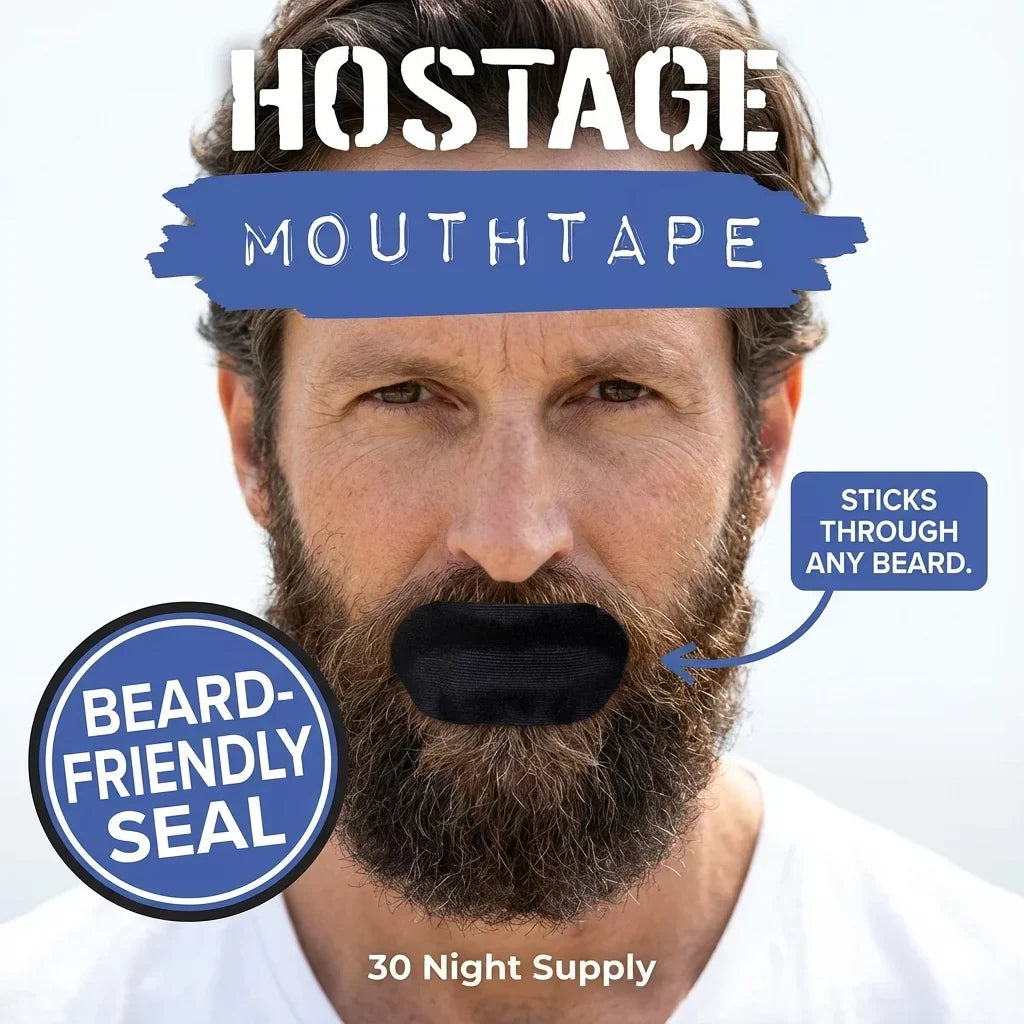
Choosing mouth tape starts with the specific product: check its intended use, adhesive information, size, facial-hair guidance, removal instructions, and total cost. A material name alone does not tell you how a finished strip will fit or perform.
By Alex Neist
In this guide
- Start with the product instructions
- Four features to compare
- Understand material labels
- Compare pack sizes and purchase terms
- Where Hostage Tape fits
- Common buying questions
Start with the product instructions
Choose from products with clear mouth-taping instructions and read their cautions before buying. Keep the instructions available for application and removal, rather than relying on a product photo or a customer's review.
Keep household tape out of the comparison
Duct tape, electrical tape, and packing tape are not substitutes for a product sold with mouth-taping instructions. Likewise, a surgical tape's dressing or tubing instructions do not establish an overnight mouth-taping use. Compare the intended use of the exact product, not just the word “tape.”
Start with your main buying question
- Shopping with a beard or mustache? Start with our guide to mouth taping with a beard for product-specific fit and removal guidance.
- Comparing pack prices? Use the pack-size and purchase checklist below to compare the same purchase type.
- Checking how to apply or remove it? Read the Hostage Tape application and removal FAQ alongside the instructions supplied with your product.
Four features to compare
1. Adhesive information and removal
Look for the manufacturer's adhesive information, skin-contact guidance, and removal steps. If a listing says “medical-grade” or “hypoallergenic,” ask what testing and instructions support that description. Those words alone do not answer whether a particular strip suits your skin or how you should remove it.
The American Academy of Dermatology explains that identifying and avoiding the cause is central to managing contact dermatitis. If you have a history of reactions to adhesives, discuss product selection with a dermatologist instead of choosing by a label alone. Read the AAD's contact dermatitis guidance.
2. Backing, flexibility, and breathability
Read the backing and adhesive descriptions separately. Paper, fabric, and silicone do not describe interchangeable features: a product can have one material as its backing and a different material as its adhesive. Check the finished product's specifications instead of assigning a universal winner to a material category.
3. Size and shape
Compare the strip dimensions, application diagram, and coverage shown by the manufacturer. Check whether the pack contains pre-cut strips or a roll. A photograph without dimensions makes it harder to compare two products accurately. If the listing omits a measurement you need, ask customer support before ordering.
4. Facial-hair guidance
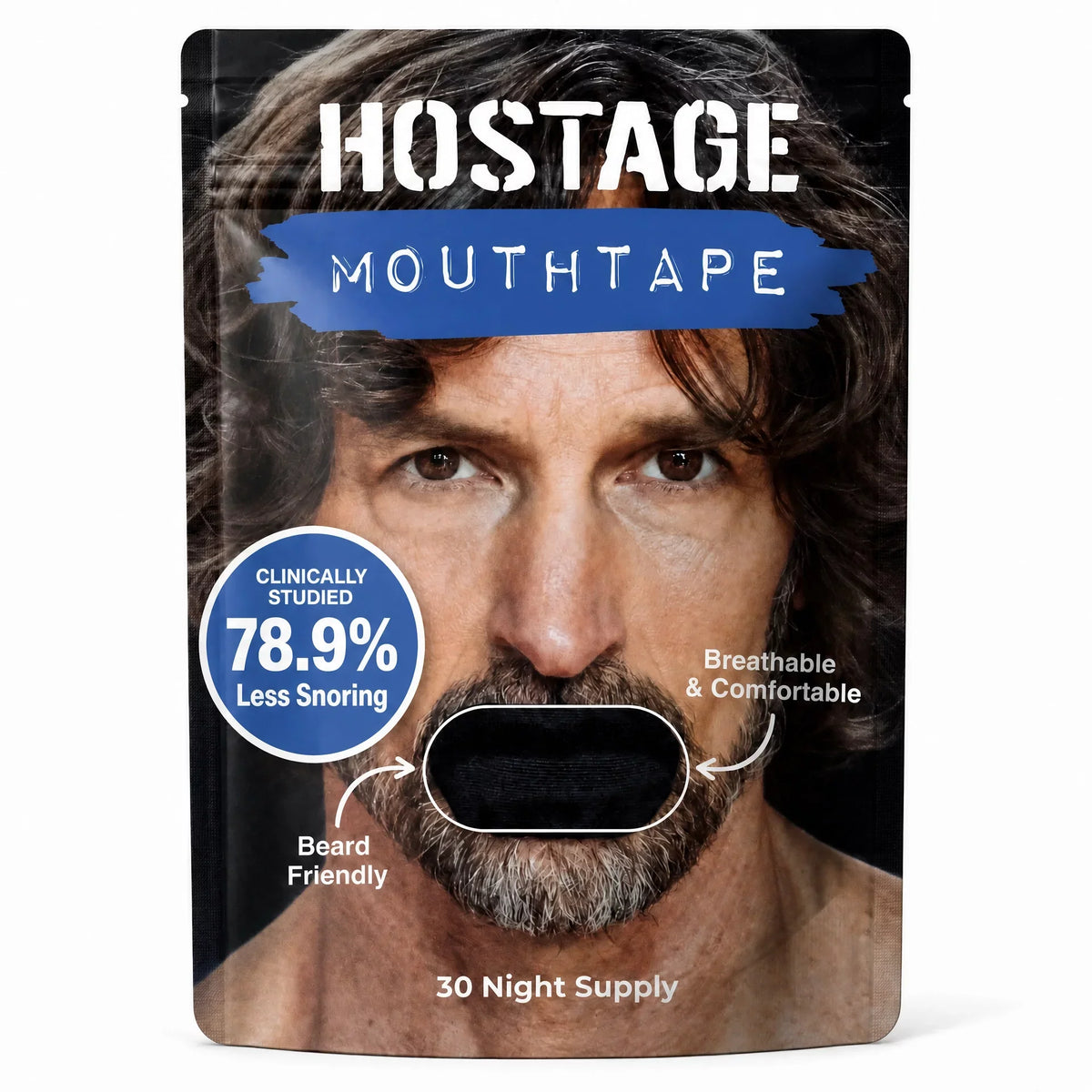
For a beard or mustache, look for explicit facial-hair guidance rather than assuming that every adhesive performs the same way. Hostage Tape is designed for bearded users, and its FAQ provides application and removal guidance. Check the Hostage Tape FAQ. Compare those instructions with how you plan to use the product.
Understand material labels before comparing products
“Paper tape is not breathable” is too broad. Solventum describes its Micropore surgical tape as breathable paper tape. Its product descriptions also identify a separate Micropore S product with silicone adhesive. These are product specifications, not evidence that either product is intended for overnight mouth taping. See Solventum's product descriptions on page 5.
Instead of ranking fabric, paper, and silicone as universally best or worst, record the exact product name and version. Then compare its intended use, backing, adhesive, dimensions, and instructions. If a manufacturer does not provide a detail, mark it as unknown rather than inferring it from the material name.
Compare pack sizes and purchase terms
Use this short checklist when comparing two listings:
- Pack contents: record the number of strips in the selected option. Distinguish mouth tape from any bundled nose strips or other items.
- Comparable cost: divide the mouth-tape pack price by its strip count. Compare the same type of purchase, such as one-time orders, and account for shipping separately.
- Recurring terms: check whether the selected price starts a subscription, its delivery interval, and how changes or cancellations work.
- Return terms: read the policy attached to that offer, including its time limit and any conditions. Do not assume every bundle has identical terms. Buying directly from Hostage Tape? Read the current return and refund policy before opening multiple pouches.
- Support: make sure you can find the instructions and contact the seller if fit, contents, or removal guidance is unclear.
For example, a hypothetical $30 pack containing 30 strips costs $1 per strip before shipping. That calculation compares price; it does not establish comfort, suitability, or sleep results. Check current prices and terms at checkout rather than relying on an old comparison chart.
Where Hostage Tape fits
Hostage Tape combines a flexible, breathable design with a focus on facial-hair compatibility. Its current product page describes BeardFlex and AirFlow features and shows the application steps. Review Hostage Tape's product details and current options.
Better sleep is the goal. In the brand's three-week, single-blind, active-comparator clinical study, 84.6% of final study participants reported better sleep. That percentage counts participants reporting improvement; it is not an 84.6% increase in sleep quality or a guarantee for each buyer. Read the clinical study summary.
For instructions and cautions, use the current product guidance and our complete guide to mouth taping. Hostage Tape's product instructions say not to use it if you have difficulty breathing through your nose and to remove it immediately if you feel discomfort. Its FAQ explains removal: peel slowly from one corner, roll downward, and use warm water if needed.
Common buying questions
What should I compare when choosing the best mouth tape for sleeping?
Compare the exact product's intended use, fit, adhesive information, facial-hair guidance, removal instructions, and pack cost. Read the product cautions before choosing. A material label or a lower price alone does not establish which mouth tape is best for you.
Is paper medical tape always non-breathable?
No. Solventum describes Micropore surgical tape as breathable paper tape. Check the exact product specifications and intended use; that description does not establish an overnight mouth-taping use.
How should I compare mouth-tape prices?
Divide the selected mouth-tape pack price by its strip count, compare the same purchase type, and account for shipping separately. Check subscription and return terms before ordering.
What should I check if I have a beard?
Look for explicit facial-hair guidance and read the application and removal instructions. Hostage Tape is designed for bearded users; its FAQ provides more detail.
Ready to compare named products? Our best mouth tape shortlist compares Hostage Tape, SomniFix and MyoTape by format, facial-hair guidance and dated pack costs.
Make your choice with the details in front of you
Shortlist products with clear instructions, compare the exact versions, and check fit, facial-hair guidance, and purchase terms. Keep the product's stated features separate from its research results. That gives you a more useful buying decision than a broad ranking of tape materials.
Important disclaimer: This article is for informational purposes only and does not constitute medical advice. Always consult with a qualified healthcare professional for any health concerns or before making any changes to your health routine.
Share:
Nasal Breathing vs. Mouth Breathing: The Ultimate Guide
Is Mouth Taping Safe? What Medical Experts Say