

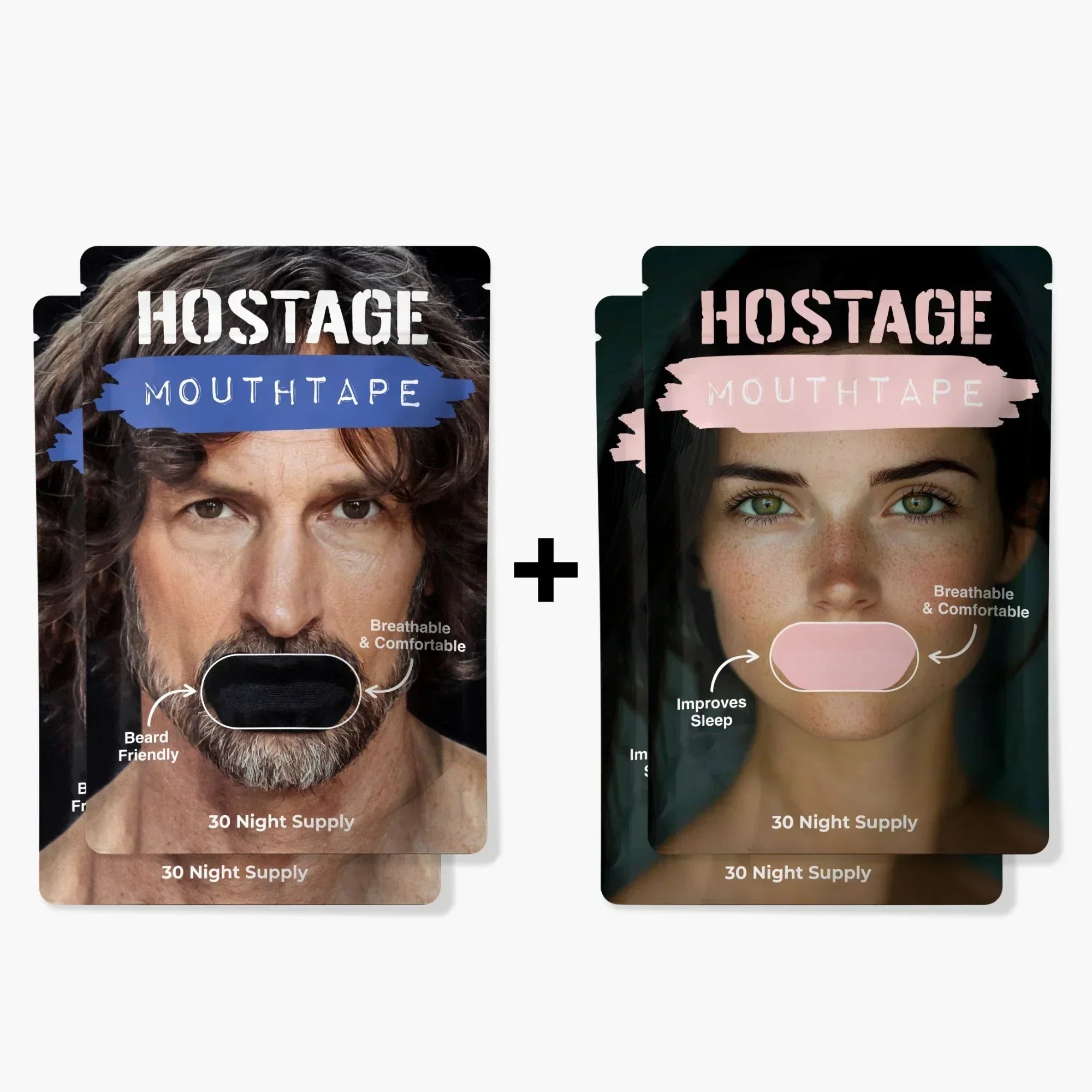
Is Mouth Taping Safe? What Science (and Common Sense) Really Say
By Dr. David Alfi, DDS, MD, FACS • Oral and Maxillofacial Surgeon
Estimated read time: 6 minutes
Quick Answer: For most healthy adults, mouth taping is generally safe when done properly with a skin-safe, breathable tape. But it should never feel restrictive or interfere with breathing. People with nasal obstruction, untreated sleep apnea, or respiratory illness should consult a physician before trying it [1].
What is mouth taping?
Mouth taping involves gently closing your lips with a soft adhesive strip while you sleep to encourage nasal breathing. Nasal breathing filters, warms, and humidifies air — supporting oxygen balance, sleep quality, and even oral health [2].
When is mouth taping safe?
Mouth taping is considered safe for people who can comfortably breathe through their nose and don’t have chronic congestion or severe sleep apnea. The key is using a purpose-designed tape like Hostage Tape, which is breathable, skin-safe, and removable without pain [3].
| Condition | Safe to Tape? | Recommendation |
|---|---|---|
| Healthy nasal breathing | ✅ Yes | Start with short sessions and use purpose-built tape |
| Nasal congestion or allergies | ⚠️ Sometimes | Wait until congestion clears or address airflow first |
| Untreated sleep apnea | 🚫 No | Consult a sleep specialist before use |
Why is mouth taping controversial?
The controversy comes from people using the wrong kind of tape — like duct tape or medical tape — which can block airflow or irritate skin. The issue isn’t mouth taping itself; it’s using unsafe materials or ignoring underlying breathing problems [4].
How does Hostage Tape make mouth taping safer?
Hostage Tape was engineered specifically for overnight comfort and safety. It’s hypoallergenic, latex-free, breathable, and easily removable — even for people with facial hair or sensitive skin. Thousands of users have reported quieter, deeper sleep and better hydration without irritation.
When to avoid mouth taping
- If you have nasal blockage, deviated septum, or sinus infection
- If you wake up short of breath or gasp for air at night
- If you’re ill, congested, or recently had nasal surgery
- If your doctor advises against it for medical reasons
Skin-safe, breathable, and trusted by thousands for safe, restorative sleep.
Related Links
References
- Courtney R. The functions of breathing and its dysfunction. Breathe. 2016;12(3):213–220. PubMed 27683615
- Eccles R. Nasal airflow and air conditioning. Breathe. 2003;9(5):353–360. PubMed 14621159
- Bonnet MH et al. Physiologic and arousal effects of breathing patterns on sleep quality. Sleep. 2017;40(2):zsx010. PubMed 28364473
- Ruhle K et al. Impact of mouth leak on sleep-disordered breathing. Sleep Med. 2011;12(5):427–431. PubMed 21459663
Disclosure
Dr. Alfi serves as a clinical advisor to Hostage Tape and provides professional insight on airway and sleep health. He does not receive commissions for product sales; his role centers on safe, evidence-based education.
Medical Disclaimer
The information in this article is for educational purposes only and does not constitute medical or dental advice. It should not replace individualized care from a qualified healthcare provider. Mouth taping may support nasal breathing and sleep quality but is not a treatment for sleep apnea or respiratory illness.
Source Transparency
All statistics and claims are supported by peer-reviewed respiratory and sleep research (see References). No clinical trials have evaluated Hostage Tape as a medical treatment.
Share:
What Does Mouth Tape Do?
Why Am I So Tired All the Time?